BROOKS SLA5850S1GAB1C2A1M44BAA4F Carbon Dioxide Flow Sensor Smart Delta Controller 50ML/MIN
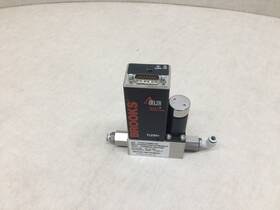
( Brand: Brooks ), ( Manufacturer Part Number: SLA5850S1GAB1C2A1M44BAA4F ), ( Part Type: Flow Sensor Controller Min )
Review BROOKS Carbon Dioxide Mass Flow Sensor Smart Controller Delta 50ml/min
The **Brooks SLA5850S1GAB1C2A1M44BAA4F Carbon Dioxide (CO ) Flow Sensor with Smart Controller** is a high-precision, advanced gas monitoring solution designed for applications requiring accurate, real-time measurement of carbon dioxide flow rates in controlled environments. Engineered with cutting-edge technology, this device combines a robust **mass flow sensor** with an intelligent **Delta 50 ml/min** smart controller, delivering unparalleled reliability and performance for laboratory, medical, or industrial gas delivery systems. The sensor utilizes a **thermal mass flow principle**, ensuring precise and repeatable measurements across a wide range of flow rates, from ultra-low to moderate levels, making it ideal for applications such as cell culture incubators, bioreactors, or respiratory research where CO regulation is critical. Its **compact yet durable design** integrates seamlessly into existing gas supply networks, offering both analog and digital output interfaces for easy integration with larger control systems or data acquisition platforms. The smart controller enhances functionality by providing **real-time feedback, flow rate adjustments, and diagnostic alerts**, allowing operators to maintain optimal gas delivery conditions with minimal intervention. Built with **high-grade materials**, including corrosion-resistant components and a sealed sensor housing, this unit ensures long-term stability and resistance to environmental contaminants, making it suitable for demanding applications in sterile or high-hygiene environments. Whether used in **biomedical research, pharmaceutical manufacturing, or environmental testing**, the Brooks SLA5850S1GAB1C2A1M44BAA4F delivers the accuracy, consistency, and smart control needed to achieve precise CO management with confidence.
### **Pros and Cons of buying a Brooks SLA5850S1GAB1C2A1M44BAA4F Carbon Dioxide (CO ) Flow Sensor with Smart Controller (Delta 50 mL/min)**
#### **Pros**
1. **Precision and Accuracy** The Brooks SLA5850 series is known for high-precision mass flow sensing, making it ideal for applications requiring consistent and reliable CO delivery. The smart controller enhances calibration and real-time monitoring, reducing human error.
2. **Smart Controller Integration** The Delta 50 mL/min controller allows for programmable setpoints, data logging, and remote monitoring via compatible interfaces (e.g., RS-232, USB, or Ethernet, depending on configuration). This improves workflow efficiency, especially in research or industrial settings.
3. **Low Flow Range Suitability** With a Delta of 50 mL/min, this sensor is well-suited for applications requiring precise low-flow rates, such as cell culture, small-scale bioreactors, or laboratory gas delivery systems.
4. **Durability and Reliability** Brooks instruments are built for long-term use, with robust construction to withstand repeated use in controlled environments. The thermal mass flow sensing technology is less prone to drift compared to mechanical flow meters.
5. **Compatibility with CO ** The sensor is specifically designed for CO , ensuring accurate readings without cross-sensitivity issues that might arise with other gases.
6. **Minimal Maintenance** Unlike mechanical flow meters, thermal sensors have no moving parts, reducing wear and tear and the need for frequent recalibration.
7. **Scalability** The modular design allows for integration into larger systems, making it adaptable for future upgrades or expansions in research or industrial setups.
---
#### **Cons**
1. **High Initial Cost** Brooks mass flow sensors are premium-priced, which may be prohibitive for small labs, startups, or budget-conscious users. The smart controller adds further expense.
2. **Complex Setup and Calibration** While the smart controller simplifies some aspects, initial setup and calibration may require technical expertise, potentially involving additional training or support costs.
3. **Limited Flow Range** The Delta of 50 mL/min restricts its use to low-flow applications. For higher flow rates, a different model would be necessary, limiting versatility.
4. **Power Dependency** The sensor requires a stable power source, and any fluctuations could affect performance. Backup power options may need to be considered for uninterrupted operation.
5. **Software and Interface Requirements** The smart controller may require proprietary software for full functionality, which could add complexity if the user lacks IT support or familiarity with such systems.
6. **Potential for Sensor Drift Over Time** While thermal sensors are generally stable, long-term use may still require periodic recalibration to maintain accuracy, adding to maintenance costs.
7. **Vendor Lock-In** Brooks equipment often relies on proprietary interfaces or software, which could limit flexibility if the user needs to switch to alternative systems in the future.
---
### **Conclusion**
The **Brooks SLA5850S1GAB1C2A1M44BAA4F CO flow sensor with smart controller** is a high-quality, precision instrument ideal for applications demanding accurate low-flow CO delivery. Its smart features enhance usability and integration into automated systems, making it a strong choice for research labs, bioreactor setups, or industrial processes where reliability and data logging are critical.
However, the **high cost, complexity of setup, and limited flow range** may not justify the purchase for users with simpler needs or tight budgets. If the application requires only basic flow control without advanced monitoring, a less expensive alternative (e.g., a mechanical flow meter or a simpler electronic sensor) might suffice.
### **Recommendation**
**Buy this sensor if:**- You require **high-precision CO flow control** in a research, bioprocessing, or controlled-environment application.
- You need **programmable, data-logging capabilities** for process optimization or compliance.
- Your budget allows for **premium instrumentation** with long-term reliability.
**Consider alternatives if:**- Your application only requires **basic flow control** without advanced features.
- You need **higher flow rates** beyond 50 mL/min.
- Cost is a major constraint, and a **lower-cost sensor** (e.g., a mechanical or basic electronic flow meter) would meet your needs.
For most **serious CO -dependent applications** (e.g., cell culture, fermentation, or gas mixing), this Brooks sensor is a **strong, long-term investment** despite its higher upfront cost. However, always verify compatibility with your specific workflow and consult with a technical specialist to ensure it meets all operational requirements.
Details:
Used - See Photos.
part #: sla5850s1gab1c2a1m44baa4f prices
- $100.00-$150.00
specifications pneumativalv:
- brand: Brooks
- mpn: Sla5850s1gab1c2a1m44baa4f
- part type: Flow Sensor Controller Min
general pneumativalv:
- Pump Flow Controllers > Flow Controllers Meters > Mass Flow Controllers
- condition: Used
seller pneumativalv:
- # reviews: 3803
- city: wood land, Washington
- rating: 99.9%
shipping pneumativalv:
- class: Standard
- cost: $0.00
- type: Fixed
- service: Standard
- transit: 3-7 Days
payments pneumativalv:
- credit card: Discover
- other
- wallet: Apple-pay
returns pneumativalv:
- paid by: Buyer
- method: Money back
- time: 30 Days
- policy: Returns Accepted
offer pneumativalv:
- best offers: True
- quantity: 1
- availability: In Stock
- sold: 0
- options: Ship-to-home
- started: March 11, 2026
Brooks SLA5850S1GAB1C2A1M44BAA4F Is Similar To:
- 0151aad2a11a Brooks Instrument Flow Computer (28.6% similar) Includes what is in the pics. Brooks instrument 0151AAD2A11A flow controller. Used working pull, see all 12 pics for details...(June 9th, 2018)
- 0152-ee2a11a Brooks Instrument Mass Flow Meter Readout (36% similar) Brooks 0152E model mass flow controller meter readout UNIT2-CHANNELS comes with power cord full number: 0152 EE2A11ASERIAL 370...(May 12th, 2018)
- 0154 Brooks Instrument Microprocessor Flow (26.1% similar) Pulled from a pilot unit we decommissioned. Up for sale is a Brooks instrument microprocessor control read out unit model panel mounted design. You can reach us by phone at extension 106 or messaging through...(December 14th, 2017)
- 0154bbc2a11a Brooks Instrument Microprocessor Mass Read Out Control Electronics (34.3% similar) Boxes is on a case by basis. The readout function is a back lit 4 x 20 character display. Please see pictures for reference. Signal OUTPUT0 1 5 CDC or ma, impedance kw minimum 750W maximum electrical two four 15-PINCONNECTORS for connecting the mass flow pressure control equipment. One 15-...(July 28th, 2018)
- 0190-32365-04 Brooks Gf 125cxxc Mass (22.7% similar) Smaller items will normally ship USPS and heavier FedEx ground...(October 23rd, 2017)
- 0190-40282-01 Brooks Gf Mass Thermal Flow Controller Amat (40.5% similar) Used excellent condition Brooks GIF 125CXC mass thermal flow controller Amati in: 9B800-9-18...(September 7th, 2018)
- 0190-49895-01 Brooks Gf 125cxxc Mass (22.7% similar) Smaller items will normally ship USPS and heavier FedEx ground...(October 23rd, 2017)
- 0254aa1a23a Brooks Channel Power Supply Readout Setpoint Controller (38% similar) Shipping is for USA deliveries only...(May 25th, 2018)
- 0550a Brooks Mass Flow Controller Slm (45.1% similar) Brooks mass flow controller model: 0550A range: scam gas: h2 inlet pressure: 20 pig condition: refurbished this has been calibrated by a 3RD party company. The calibration certificate is included with all necessary details...(October 4th, 2018)
- 0550eb14h5da Brooks Instruments Mass Flow Controller Mfc Slm New (42.5% similar) Specifications part no: 0550EB14H5DA model 0550E range gas: 10 slam, h2 interface: 12 pin barrel connector: 1/2 VCR Ce marked contains certificate of calibration sale details item condition: new, 90 day warranty estimated packed shipping dimensions: l x w8 x8 lbs. Pictured test equipment is not ...(March 1st, 2018)
- 0550eb25h1ea Brooks Instruments Mass Flow Controller Mfc Slm New (42.5% similar) Specifications part no: 0550EB25H1EA model 0550E range gas: 200 slam, h2 interface: 12 pin barrel connector: 1/2 VCR Ce marked contains certificate of calibration sale details item condition: new, 90 day warranty estimated packed shipping dimensions: l x w8 x8 lbs. Brooks instruments 0550EB25H1EA ...(March 1st, 2018)