BROOKS INSTRUMENT GF125C-204731 Flow Controller Sccm Amat 860 N2 0190-49894-05
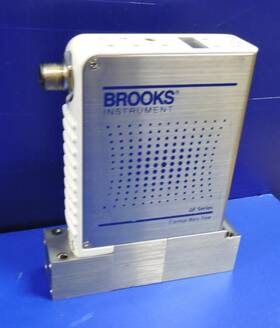
( Brand: Brooks Instrument ), ( Manufacturer Part Number: GF125C-204731 ), ( Part Type: Flow Instrument Controller ), ( Maximum Flow Rate: 860 Sccm Digital Mass Flow Controller ), ( Gas Media: N2 Nitrogen ), ( Country Of Origin: United States )
Review BROOKS INSTRUMENT Mass Flow Controller 860 Sccm N2 Amat
The **Brooks GF125C-204731 Flow Controller (Model 860 Series, 860 SCCM, N AMAT 0190-49894-05)** is a high-performance, mass flow controller designed for precision gas delivery in demanding industrial and research applications. Part of Brooks Instrument s renowned **860 Series**, this device combines advanced thermal mass flow technology with robust engineering to provide accurate, stable, and repeatable gas flow control across a wide range of process conditions. Engineered for nitrogen (N ) applications, this model is particularly well-suited for semiconductor manufacturing, thin-film deposition, chemical vapor deposition (CVD), and other high-precision environments where consistent gas flow is critical to product quality and process reliability.
The **GF125C** operates on a **thermal mass flow sensing principle**, utilizing a heated filament to measure gas flow by detecting the cooling effect of the passing gas. This method ensures high accuracy ( 1% of reading or better) and excellent linearity, even at low flow rates, making it ideal for applications where minute variations in gas delivery can significantly impact outcomes. With a **maximum flow range of 860 standard cubic centimeters per minute (SCCM)**, this controller is optimized for medium-flow applications, offering precise control without the complexity or cost of higher-capacity systems. Its **digital output signals (4-20 mA or RS-485 Modbus)** enable seamless integration with PLCs, DCS, or other automation systems, allowing for real-time monitoring and adjustment of gas flow parameters.
Built to withstand the rigors of industrial environments, the **GF125C** features a **durable stainless steel construction** with corrosion-resistant materials, ensuring long-term reliability in harsh conditions. The **AMAT (Applied Materials) compatibility** designation indicates that this model has been specifically validated for use in Applied Materials semiconductor equipment, where strict adherence to process specifications is non-negotiable. The **0190-49894-05** designation likely refers to a specific configuration or calibration variant, ensuring compatibility with particular gas supply systems or process requirements. Additionally, the controller includes **over-pressure protection, flow limit alarms, and user-configurable setpoints**, enhancing safety and operational flexibility.
For applications requiring **high-purity nitrogen**, the GF125C excels in maintaining consistent flow rates with minimal drift, even under varying pressure or temperature conditions. Its **low-power consumption** and **compact design** make it suitable for integration into existing gas delivery systems without requiring significant modifications. Whether used in **CVD reactors, plasma etching chambers, or other precision gas applications**, this flow controller delivers the precision, durability, and reliability demanded by modern manufacturing and research environments. With its combination of **thermal mass flow sensing, digital communication, and industrial-grade construction**, the Brooks GF125C-204731 stands as a dependable solution for critical gas flow control in high-technology industries.
### **Brooks GF125C-204731 Flow Controller (860 sccm, N , AMAT 0190-49894-05) Pros and Cons**
#### **Overview**
The **Brooks GF125C-204731** is a mass flow controller (MFC) designed for precise gas flow regulation, commonly used in semiconductor manufacturing, research labs, and industrial applications. This model is specified for **nitrogen (N )** with a **maximum flow rate of 860 sccm** and is compatible with **AMAT (Applied Materials) systems** under part number **0190-49894-05**.
---
### **Pros**
1. **High Precision and Accuracy**
- Brooks MFCs are known for their **tight flow control ( 1% of reading or better)**, making them ideal for critical applications where consistency is essential (e.g., CVD, PVD, plasma etching).
- Digital control ensures **repeatability** across cycles, reducing process variability.
2. **Compatibility with AMAT Systems**
- The **0190-49894-05** designation indicates **OEM compatibility** with Applied Materials equipment, ensuring seamless integration without modification.
- Reduces downtime and compatibility issues in manufacturing environments.
3. **Durability and Reliability**
- Brooks is a **well-established brand** in mass flow control, with a reputation for **long-term stability** and **low maintenance requirements**.
- Built for **industrial use**, with robust construction to handle **vibration, temperature fluctuations, and continuous operation**.
4. **Wide Gas Compatibility (with Proper Calibration)**
- While this unit is **pre-calibrated for N **, Brooks MFCs can be **recalibrated for other gases** (e.g., Ar, He, O ) with minimal effort, extending its utility.
5. **Digital Interface and Control Options**
- Supports **RS-232, analog (4-20 mA), or digital communication** (depending on model variant), allowing integration with **PLCs, DCS, or lab automation systems**.
- Some models offer **remote calibration and diagnostics**, reducing on-site troubleshooting.
6. **Low Leakage and Tight Sealing**
- The **ceramic or metal-sealed sensors** minimize leakage, ensuring **high-purity gas delivery** critical in semiconductor fabrication.
7. **Energy Efficiency**
- Electronic mass flow control is **more efficient** than mechanical regulators, reducing wasted gas and operational costs over time.
8. **After-Sales Support and Spare Parts Availability**
- Brooks has a **global support network**, with **authentic spare parts** readily available, reducing downtime in critical applications.
9. **Calibration Stability Over Time**
- Unlike mechanical flow meters, **electronic MFCs retain calibration accuracy longer**, reducing the need for frequent recalibration.
10. **Safety Features**
- Many Brooks MFCs include **over-pressure protection, reverse flow prevention, and fail-safe modes** to prevent equipment damage.
---
### **Cons**
1. **High Upfront Cost**
- Brooks MFCs are **premium-priced**, especially when compared to **basic mechanical regulators or cheaper digital MFCs** from lesser-known brands.
- The **AMAT-compatible version** may carry an additional premium due to OEM specifications.
2. **Limited Flow Range for Some Applications**
- The **860 sccm maximum flow** may be **too low** for high-throughput industrial processes (e.g., large-scale CVD reactors).
- If higher flows are needed, multiple units or a **higher-range model** (e.g., GF125C with a 2,000 sccm sensor) may be required.
3. **Gas-Specific Calibration Required**
- While pre-calibrated for **N **, switching to **other gases (e.g., H , CH )** requires **recalibration**, which may add cost and downtime.
- Some gases (e.g., **corrosive or reactive gases**) may void warranty if not handled properly.
4. **Potential for Sensor Drift Over Time**
- Like all electronic sensors, **thermal or mechanical stress can cause gradual drift**, requiring **periodic recalibration** (typically every **6 12 months** in demanding environments).
- High-purity or corrosive gases may accelerate sensor degradation.
5. **Complexity in Installation and Setup**
- Unlike simple mechanical regulators, **MFCs require proper grounding, wiring, and calibration** during installation.
- **User error in setup** (e.g., incorrect gas selection, improper wiring) can lead to **inaccurate flow control**.
6. **Dependence on Power Supply Stability**
- Electronic MFCs **require a stable power source**; fluctuations can cause **flow inaccuracies or shutdowns**.
- Some models may need **uninterruptible power supply (UPS) protection** in unstable environments.
7. **Limited Mechanical Durability in Harsh Environments**
- While robust, **extreme vibration, temperature swings, or contamination** (e.g., particulate in gas lines) can **reduce lifespan**.
- **Ceramic sensors** are fragile and may require **careful handling during installation**.
8. **Software and Communication Dependencies**
- If using **digital interfaces (RS-232, Modbus, etc.)**, compatibility issues with **control systems** may arise, requiring **additional programming or adapters**.
- Some older AMAT systems may have **legacy communication protocols**, complicating integration.
9. **Disposal and Recycling Challenges**
- Brooks MFCs contain **electronic components and sensors** that may require **special disposal** under environmental regulations.
- **Replacement sensors or units** may not be easily recyclable, adding to operational costs.
10. **Training Required for Optimal Use**
- Proper **calibration, troubleshooting, and maintenance** require **technical knowledge**, which may not be available in-house.
- **Third-party calibration services** can add to long-term costs.
---
### **Conclusion**
The **Brooks GF125C-204731 (860 sccm, N , AMAT 0190-49894-05)** is a **highly reliable, precision-engineered mass flow controller** ideal for **semiconductor manufacturing, research labs, and industrial processes** where **accurate gas flow control is critical**. Its **OEM compatibility with AMAT systems**, **long-term stability**, and **low leakage** make it a **preferred choice** for applications requiring **consistent, repeatable results**.
However, the **high cost, limited flow range for some applications, and maintenance requirements** (such as recalibration) must be carefully considered. If **budget constraints** are a concern, alternatives like **less expensive digital MFCs or mechanical regulators** (with lower precision) may suffice for **less critical applications**. Conversely, if **maximum accuracy and system integration** are priorities, the Brooks unit remains a **strong, long-term investment**.
---
### **Recommendation**
**Buy the Brooks GF125C-204731 if:**You require **high-precision flow control** for **semiconductor, thin-film deposition, or plasma processing**.
**AMAT system compatibility** is mandatory (e.g., Applied Materials CVD/PVD tools).
You can **justify the upfront cost** based on **process reliability and reduced waste**.
Your application **does not exceed 860 sccm** (or you can use multiple units in parallel).
You have **access to proper calibration and maintenance support**.
**Consider Alternatives if:**Your budget is **strictly limited** explore **lower-cost MFCs** (e.g., **Alicat, Bronkhorst, or Omega**) that offer similar digital control.
You need **higher flow rates** (>1,000 sccm) opt for a **Brooks GF125C with a 2,000 sccm sensor** or a **larger model (e.g., GF125C-204732)**.
Your application is **not critical** a **mechanical regulator with a digital display** may suffice for less demanding tasks.
You lack **technical expertise** ensure proper **training or third-party support** is available for installation and calibration.
**Final Verdict:**For **high-reliability, OEM-compatible gas flow control in semiconductor or industrial applications**, the **Brooks GF125C-204731 is an excellent choice**, despite its cost. However, **careful evaluation of flow requirements, budget, and long-term maintenance** is essential before purchase. If possible, **test a unit in your specific application** before committing to ensure it meets your needs.
Details:
Brooks Part No: GF125C-204731. It actively compensates for upstream and downstream pressure fluctuations to prevent flow variations, spikes, or crosswalk, eliminating the need local regulators. Multi Flo Technology: Built-in configured support allows users to change gas types or flow ranges using advanced lab-tested model ING without removing the device from line. Ultra-Fast Performance: Achieves rapid settling times between 300 ms and 700 ms, minimizing the first run effect transient flow errors.
part #: gf125c204731 prices
- $195.00-$299.00
specifications pneumativalv:
- brand: Brooks Instrument
- mpn: Gf125c-204731
- part type: Flow Instrument Controller
- maximum flow rate: 860 Sccm Digital Mass Flow Controller
- gas media: N2 Nitrogen
- country of origin: United States
returns pneumativalv:
- paid by: Seller
- time: 30 Days
- method: Money back
- policy: Returns Accepted
offer pneumativalv:
- availability: In Stock
- options: Ship-to-home
- sold: 0
- started: May 18, 2026
- quantity: 1
- best offers: True
general pneumativalv:
- condition: Used
- Pump Flow Controllers > Flow Controllers Meters > Mass Flow Controllers
payments pneumativalv:
- credit card: Visa
- other
- wallet: Paypal
shipping pneumativalv:
- class: Standard
- cost: $15.00
- transit: 3-8 Days
- type: Fixed
- service: USPS Ground Advantage
- carrier: USPS
seller pneumativalv:
- # reviews: 2872
- city: San Jose, California
- rating: 99.4%
Brooks Instrument GF125C-204731 Is Similar To:
- 0151aad2a11a Brooks Instrument Flow Computer (44.1% similar) Includes what is in the pics. Brooks Instrument 0151AAD2A11A flow controller. Used working pull, see all 12 pics for details...(June 9th, 2018)
- 0152-ee2a11a Brooks Instrument Mass Flow Meter Readout (49.6% similar) Brooks 0152E model mass flow controller meter readout UNIT2-CHANNELS comes with power cord full number: 0152 EE2A11ASERIAL 370...(May 12th, 2018)
- 0152e Brooks Instrument Microprocessor Control Readout Unit (47.9% similar) Unit has wear from previous use including scuffs and scratches. Ready to ship today. Photos of actual item for sale. Unit only, no power cable or accessories included. Brooks 0152E microprocessor control readout unit has been tested onsite and is guaranteed fully functional...(November 8th, 2018)
- 0154 Brooks Instrument Microprocessor Flow (41.6% similar) Pulled from a pilot unit we decommissioned. Up for sale is a Brooks Instrument microprocessor control read out unit model panel mounted design. You can reach us by phone at extension 106 or messaging through...(December 14th, 2017)
- 0154bbc2a11a Brooks Instrument Microprocessor Mass Read Out Control Electronics (45.7% similar) Boxes is on a case by basis. The readout function is a back lit 4 x 20 character display. Please see pictures for reference. Signal OUTPUT0 1 5 CDC or ma, impedance kw minimum 750W maximum electrical two four 15-PINCONNECTORS for connecting the mass flow pressure control equipment. One 15-...(July 28th, 2018)
- 0154cfc2a11a Brooks Instrument Read Out Control Electronics (45.1% similar) Unit has minor scuffs and scratches from previous use handling. Photos of actual item for sale. Ready to ship today. Unit only, no power cable or accessories included. Brooks Instrument 0154 0154CFC2A11A read out control electronics unit has been tested onsite and is guaranteed fully functional...(December 11th, 2018)
- 0154cfd2b31a Brooks Instrument Read Out Control Electronics (45.1% similar) They are expected to show some wear as pre-owned. Brooks Instrument 0154CFD2B31A read out control electronics hello, you are viewing a listing of product wood man mechanical surplus. Exactly what is pictured included. If it is not pictured assume included...(January 12th, 2019)
- 0190-32365-04 Brooks Gf 125cxxc Mass (30.3% similar) Smaller items will normally ship USPS and heavier FedEx ground...(October 23rd, 2017)
- 0190-40282-01 Brooks Gf Mass Thermal Flow Controller Amat (50% similar) Used excellent condition Brooks gf 125CXC mass thermal flow controller amat in: 9B800-9-18...(September 7th, 2018)
- 0190-49895-01 Brooks Gf 125cxxc Mass (20.2% similar) Smaller items will normally ship USPS and heavier FedEx ground...(October 23rd, 2017)
- 0254aa1a23a Brooks Channel Power Supply Readout Setpoint Controller (29.3% similar) Shipping is for USA deliveries only...(May 25th, 2018)