OMEGA FTB603 Ultra Flow Sensor
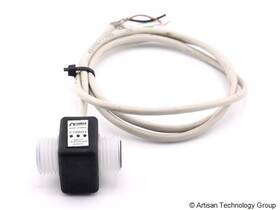
( Brand: Omega ), ( Manufacturer Part Number: FTB603 ), ( Part Type: Flow Sensor ), ( Country Of Origin: United States )
Review OMEGA Plastic Ultra low Flow Sensor
The **Omega FTB603 Ultra-Low Flow Sensor** is a high-performance, thermal mass flow sensor designed to deliver exceptional accuracy and reliability in applications where precise measurement of ultra-low gas flows is critical. Engineered with Omega s advanced thermal dispersion technology, this sensor provides real-time, contactless flow monitoring with an unmatched low detection threshold, making it ideal for industries such as semiconductor manufacturing, medical gas delivery, laboratory research, and precision aerospace testing. Its compact yet robust construction ensures seamless integration into tight spaces, while its wide operating range from sub-milliliter-per-minute flows to higher volumetric rates makes it versatile for both research-grade and industrial applications. The FTB603 employs a proprietary thermal sensor array that minimizes drift and maximizes stability, even under fluctuating environmental conditions, ensuring consistent performance over extended periods. With an analog or digital output (4-20 mA, 0-5 VDC, or RS-485 Modbus RTU), the sensor offers flexibility in system integration, allowing seamless compatibility with PLCs, data loggers, or custom control systems. Its robust stainless steel housing and IP65-rated enclosure provide protection against dust, moisture, and corrosive environments, while its low-power design reduces operational costs without compromising accuracy. Whether used in critical process control, leak detection, or scientific experimentation, the Omega FTB603 sets a new standard for ultra-low flow measurement, combining precision engineering with unparalleled durability to meet the demands of modern precision applications.
The Omega FTB603 Ultra-Low Flow Sensor is a specialized device designed for measuring very low flow rates in gases or liquids. Below is a detailed breakdown of its pros and cons, followed by a conclusion and recommendation.
---
**Pros:**1. **Ultra-Low Flow Measurement Range**: The FTB603 is specifically engineered to measure extremely low flow rates, starting as low as 0.001 sccm (standard cubic centimeters per minute) for gases. This makes it ideal for applications where conventional sensors would fail, such as in semiconductor manufacturing, vacuum systems, or precision laboratory environments.
2. **High Accuracy and Precision**: Omega claims the sensor offers high accuracy and repeatability, which is critical in industries where even minor variations in flow can significantly impact processes. The thermal mass flow sensing technology ensures reliable measurements in low-flow conditions.
3. **Wide Compatibility**: The FTB603 is designed to work with a variety of gases, including inert gases like argon, nitrogen, and reactive gases like oxygen or hydrogen, depending on the model variant. This versatility makes it suitable for diverse applications.
4. **Compact and Modular Design**: The sensor is compact, which is advantageous for installations where space is limited. Its modular design allows for easy integration into existing systems or custom setups.
5. **Digital Output**: The sensor provides digital outputs (e.g., 4-20 mA or RS-485), which simplifies data logging, monitoring, and integration with control systems. This feature is particularly useful for automated processes.
6. **Low Power Consumption**: Given its low-flow measurement capabilities, the sensor is likely optimized for energy efficiency, reducing operational costs in long-term applications.
7. **Durability and Reliability**: Omega products are generally known for their robustness. The FTB603 is likely built to withstand harsh environments, though specific durability claims should be verified based on the application.
8. **Calibration and Maintenance**: Omega sensors often come with calibration services, ensuring consistent performance over time. The FTB603 may require minimal maintenance due to its robust construction and lack of moving parts in the sensing mechanism.
---
**Cons:**1. **Limited Flow Range**: While the FTB603 excels at ultra-low flows, it may not be suitable for higher flow rates. If your application requires measuring a wide range of flows, you might need additional sensors or a different model.
2. **Cost**: Ultra-low flow sensors are typically more expensive than standard flow sensors due to their specialized design and precision engineering. The FTB603 may represent a significant investment, especially for small-scale or one-off applications.
3. **Specific Gas Requirements**: The sensor may not be compatible with all gases without additional considerations (e.g., material compatibility, calibration for specific gases). Some gases may require specialized variants or additional safety measures.
4. **Environmental Sensitivity**: Ultra-low flow sensors can be sensitive to environmental factors such as temperature fluctuations, pressure variations, or contamination. Ensuring a stable operating environment may be necessary to maintain accuracy.
5. **Installation Complexity**: Due to its precision, the FTB603 may require careful installation to avoid issues like turbulence, leaks, or improper alignment, which could compromise performance. Proper piping and setup are essential.
6. **Limited Availability of Spare Parts**: As a specialized sensor, spare parts or replacements may not be as readily available as for more common flow sensors. This could lead to longer downtimes if maintenance or repairs are needed.
7. **Learning Curve**: Users unfamiliar with ultra-low flow measurement may require training to operate, calibrate, or troubleshoot the sensor effectively. This could add to the overall cost of implementation.
8. **Potential for Drift Over Time**: Like all precision instruments, the FTB603 may experience drift in accuracy over time, requiring periodic recalibration. This adds to the long-term maintenance burden.
---
**Conclusion:**The Omega FTB603 Ultra-Low Flow Sensor is an excellent choice for applications requiring precise measurement of extremely low flow rates in gases or liquids. Its strengths lie in its ability to deliver accurate and reliable measurements in conditions where conventional sensors fail, making it indispensable in industries like semiconductor manufacturing, vacuum technology, or scientific research. However, its high cost, limited flow range, and sensitivity to environmental factors must be carefully considered. It is not a one-size-fits-all solution and may not be cost-effective for applications where higher flow rates are involved or where budget constraints are tight.
---
**Recommendation:** Purchase the Omega FTB603 Ultra-Low Flow Sensor if:- Your application demands measurement of ultra-low flow rates (e.g., below 0.01 sccm).
- Accuracy and repeatability are critical to your process, and conventional sensors are insufficient.
- You are working in an environment where space constraints or integration requirements favor a compact, modular design.
- You have the budget to invest in a high-precision sensor and can accommodate periodic calibration or maintenance.
Avoid the FTB603 if:- Your flow rates fall outside the sensor s optimal range (e.g., above 10 sccm for gases), as other sensors may be more appropriate.
- Cost is a major concern, and you can achieve similar results with a lower-cost alternative.
- Your application involves highly corrosive or abrasive gases that may damage the sensor over time without additional safeguards.
- You lack the expertise or resources to properly install, calibrate, or maintain the sensor.
For best results, consult Omega s technical documentation or a specialist to ensure the FTB603 aligns with your specific requirements. Additionally, consider pairing it with a compatible controller or data acquisition system to fully leverage its capabilities.
Details:
Are not included with this equipment unless pictured and/or listed in the above. View Photo of cut cable. Fast and hassle-free. OMEGA FTB603 Plastic Ultra-Low Flow Sensor:: This units cable has been cut and customer may need to extend.Configuration: Range: 0.5 15 LPM K Factor Pulses/Liter: 3200 of.
part #: ftb603 price
- $375.00
specifications pneumativalv:
- brand: Omega
- mpn: Ftb603
- part type: Flow Sensor
- country of origin: United States
general pneumativalv:
- Pump Flow Controllers > Flow Controllers Meters > Flow Meters
- condition: Used
shipping pneumativalv:
- transit: 4-7 Days
- class: Standard, One-day, Economy
- service: FedEx Ground / FedEx Home Delivery, FedEx Standard Overnight, FedEx Ground Economy
- carrier: FedEx
- cost: $23.97
- type: Calculated
offer pneumativalv:
- sold: 0
- started: February 26, 2026
- quantity: 7
- availability: In Stock
- options: Ship-to-home
seller pneumativalv:
- rating: 99.9%
- city: Champaign, Illinois
- # reviews: 17435
returns pneumativalv:
- policy: Returns Accepted
- paid by: Buyer
- time: 30 Days
- method: Money back
payments pneumativalv:
- wallet: Apple-pay
- credit card: Mastercard
- other
Omega FTB603 Is Similar To:
- 1k-2017-0272 Omega Flow Meter Gpm Threaded (31% similar) Omega, flow meter, FL-8309 lock: LL-4-DD...(May 16th, 2018)
- 1k-2017-0387 Omega Flow Meter (36.6% similar) 76MM pressure drop: FL-1004: 136 water. Specifications accuracy: 10 full scale repeatability: 1 meter body, clean-out plug, float stop: FDA approved poly carbonate floats: 316 stainless steel spherical o-rings: buns line connectors: valve: scales nominal length : 37MM. Omega flow meter FL-1004LOC: ...(May 22nd, 2018)
- 95063502 Omega Large Flow Meter For Inch Pipe (39.1% similar) Selling as is. Used large Omega flow meter FTBE115 for inch pipe...(July 26th, 2018)
- Dpu91p Omega Input Flow Transmitter Options (37.6% similar) If you do not see what need or more than one, please for a current inventory. Condition: used system pull. Omega DPU91P panel mount multi-parameter input flow transmitter with options DPU90-R - relay module, DPU90-C direct conductivity resistivity details: type: model: channels: 1 types: digital ...(May 1st, 2018)
- Fl-2300br Omega Flow Meter Used (35.6% similar) If another carrier such as ups or FedEx is required to ship due the size, then shipping costs may change...(July 18th, 2017)
- Fl-2302br Omega Engineering Flow Meter Model New (35.6% similar) Box has a bit of shelf wear. This flow meter id new in the factory box with instructions. Top and bottom threaded components are brass. In and out ports are 1/4 not...(August 21st, 2018)
- Fl-3610c Omega Rotameter Flow Tube Meter (36.6% similar) Omega FL-3610C rota meter 65MM flow tube meter: used, good condition. No manual, cables, or other accessories. Accessories: mounting bracket as shown. Please see photos...(January 19th, 2019)
- Fl-510 Omega Engineering Flow Meter Psi Liquid Air Port (37.1% similar) Important: all listings come only with what is shown in photos...(November 19th, 2018)
- Fl-550 Omega Flow Meter New (37.7% similar) This is a new item in original box. The FL-500 series in-line flow meter features rugged construction, easy installation and direct reading flow rates for water air at atmospheric 90 psi pressures. You can purchase this for half the list price and save hundreds of dollars. Brand new never used. ...(October 13th, 2017)
- Fl-7605b Omega New Flow-alert Flow (36.8% similar) Omega FL-7605B flow-alert switch not 3/4 in...(January 8th, 2018)
- Fl-806-v Omega Lot Of Flow Meters (40% similar) We expressly disclaim any warranty of merchant ability or fitness for a particular purpose item. Where we keep a wide selection of machine tools, tooling components, parts, accessories, and more in stock for your convenience. This is in addition to the actual shipping charges paid by buyer. Not what...(November 1st, 2018)