ANNUBAR AWR-73 Station Flow Meter
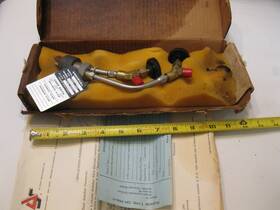
( Brand: Annubar ), ( Manufacturer Part Number: AWR-73 ), ( Part Type: Station ), ( Flow Meter Type: Electromagnetic Flow Meter ), ( Unit Type: Unit ), ( Country Of Origin: India )
Review ANNUBAR Flow Meter Station
The **Annubar AWR-73 Flow Meter Station** is a high-performance, field-proven solution designed for precise and reliable flow measurement in industrial applications where accuracy, durability, and ease of installation are paramount. Engineered by Rosemount, a leader in process instrumentation, this flow meter station combines the proven Annubar differential pressure transmitter technology with a robust, modular design to deliver exceptional performance across a wide range of fluid types, including gases, liquids, and steam. The AWR-73 is specifically tailored for applications requiring high turndown ratios, minimal pressure loss, and resistance to plugging or fouling, making it an ideal choice for challenging environments such as refineries, chemical plants, power generation facilities, and water treatment systems.
At the heart of the AWR-73 is the Annubar differential pressure sensor, which utilizes a patented, wedge-shaped element to measure flow by detecting the pressure differential created as fluid passes through the sensor. This design eliminates the need for moving parts, reducing maintenance requirements and enhancing long-term reliability. The sensor is mounted directly into the pipeline, allowing for a seamless integration that minimizes pressure drop while maximizing accuracy typically achieving an accuracy of 0.25% of reading over a wide turndown range. The modular construction of the AWR-73 enables easy installation and calibration, with the transmitter and sensor housed in a compact, weather-resistant enclosure that protects against harsh conditions, including extreme temperatures, vibrations, and corrosive atmospheres.
One of the standout features of the AWR-73 is its versatility, as it accommodates a variety of pipe sizes and flow conditions, from small-diameter lines to large industrial pipelines. The system is compatible with both metallic and non-metallic piping materials, including stainless steel, carbon steel, and even exotic alloys, ensuring compatibility with aggressive or corrosive fluids. Additionally, the AWR-73 supports a range of signal outputs, including 4-20 mA, HART, and Foundation Fieldbus, allowing for seamless integration with existing SCADA systems, PLCs, or digital control networks. This flexibility ensures that operators can monitor flow in real time, optimize process efficiency, and maintain compliance with industry standards without the need for extensive retrofitting.
The AWR-73 is also engineered with user convenience in mind, featuring a user-friendly interface for easy configuration, diagnostics, and troubleshooting. The system includes built-in self-diagnostic capabilities that alert operators to potential issues such as sensor drift, blockages, or electrical malfunctions, reducing downtime and extending equipment lifespan. Furthermore, the transmitter s robust housing and IP66 rating ensure protection against dust, water, and other environmental contaminants, making it suitable for both indoor and outdoor installations. Whether deployed in a controlled manufacturing facility or a rugged outdoor pipeline, the AWR-73 delivers consistent, high-precision flow measurement with minimal operational interference.
In summary, the **Annubar AWR-73 Flow Meter Station** represents a cutting-edge solution for industries demanding uncompromising accuracy, durability, and adaptability in flow measurement. By leveraging Rosemount s decades of expertise in differential pressure technology, this system provides a reliable, low-maintenance alternative to traditional flow meters, ensuring optimal performance in even the most demanding applications. Whether used for process optimization, energy management, or regulatory compliance, the AWR-73 stands as a testament to engineering precision and industrial resilience.
The **Annubar AWR-73 Flow Meter Station** is a differential pressure-based flow measurement device commonly used for gas and liquid applications in industrial settings. Below is a detailed analysis of its pros and cons, followed by a conclusion and recommendation.
---
### **Pros of the Annubar AWR-73 Flow Meter Station**
1. **High Accuracy and Reliability**
The Annubar system uses a differential pressure (DP) measurement principle, which is well-established and highly accurate for steady-flow conditions. When properly calibrated and installed, it can provide consistent readings over long periods, making it suitable for critical process monitoring.
2. **Wide Range of Applications**
It is versatile and can measure flow rates in various media, including gases (e.g., air, natural gas, steam) and liquids (e.g., water, oil, chemicals). The AWR-73 model is designed for industrial environments, including pipelines, HVAC systems, and process control applications.
3. **Low Pressure Drop**
Unlike some other flow measurement devices (e.g., orifice plates with high turbulence), the Annubar s tapered design minimizes pressure loss, which is beneficial for energy efficiency in large-scale systems.
4. **Durability and Robust Construction**
The AWR-73 is built to withstand harsh industrial conditions, including high temperatures, pressures, and corrosive environments. Its stainless steel or other corrosion-resistant materials ensure longevity in demanding applications.
5. **Easy Installation and Maintenance**
The modular design allows for straightforward installation in existing pipelines without requiring significant modifications. Maintenance is relatively simple, primarily involving periodic calibration checks and sensor cleaning.
6. **Compatibility with Existing Systems**
It can be integrated with PLCs, SCADA systems, or other control systems via transmitters (e.g., differential pressure transmitters) and signal conditioners, making it adaptable to automated process control.
7. **Cost-Effective for Large-Scale Use**
While the initial cost may be moderate, its durability and low maintenance requirements make it cost-effective for long-term industrial use, especially in applications where frequent recalibration of other meters (e.g., turbine meters) is necessary.
8. **Minimal Obstruction**
The Annubar s design does not significantly obstruct flow, reducing the risk of clogging or blockages compared to some other DP devices like orifice plates.
---
### **Cons of the Annubar AWR-73 Flow Meter Station**
1. **Sensitivity to Flow Conditions**
The Annubar requires stable, fully developed flow to operate accurately. Turbulent, swirling, or pulsating flow can lead to significant measurement errors. This makes it less ideal for applications with erratic flow patterns.
2. **Limited Suitability for Low Flow Rates**
While it performs well in moderate to high flow ranges, its accuracy may degrade at very low flow rates due to the limitations of differential pressure measurement. Additional flow conditioners or larger sensors may be needed for precise low-flow applications.
3. **Requires Proper Installation and Calibration**
Misalignment, improper tap locations, or incorrect installation can introduce errors. Unlike some digital flow meters, the Annubar relies on the accuracy of the DP transmitter and the flow profile, which must be carefully managed.
4. **Not Ideal for Highly Viscous Fluids**
While it can measure viscous liquids, its performance may be inferior to specialized meters like positive displacement or magnetic flow meters in highly viscous or non-Newtonian fluids.
5. **Potential for Fouling or Erosion**
In dirty or abrasive environments, the sensor ports or taps can become clogged or eroded over time, requiring more frequent maintenance or cleaning.
6. **Dependence on External Transmitters**
The Annubar itself does not measure flow directly; it relies on a separate differential pressure transmitter to convert the DP signal into a flow rate. This adds complexity and potential points of failure in the system.
7. **Limited Dynamic Range**
The AWR-73 may struggle to maintain accuracy across a very wide range of flow rates without recalibration or sensor changes. This can be a drawback in applications with highly variable flow demands.
8. **Less Suitable for Pulsating or Unsteady Flow**
Unlike some ultrasonic or vortex meters, the Annubar is not well-suited for applications with significant flow pulsations or rapid changes, as these can affect the DP reading.
---
### **Conclusion**
The **Annubar AWR-73 Flow Meter Station** is a robust and reliable choice for industrial flow measurement in applications where stable, moderate to high flow rates are expected. Its strengths lie in its accuracy, durability, and low pressure drop, making it ideal for gas and liquid pipelines, HVAC systems, and process control environments. However, its limitations such as sensitivity to flow conditions, dependence on calibration, and reduced performance in low or pulsating flow must be carefully considered.
For applications with **steady, well-conditioned flow**, the AWR-73 is an excellent investment due to its cost-effectiveness and longevity. In contrast, for **highly variable, low, or turbulent flow conditions**, alternative technologies (e.g., ultrasonic, vortex, or Coriolis meters) may be more appropriate.
---
### **Recommendation**
**Buy the Annubar AWR-73 if:**- You are measuring **gas or liquid flow in a stable, industrial pipeline** with moderate to high flow rates.
- Your application requires **low maintenance and high durability** in harsh environments.
- You have **proper flow conditioning** (e.g., straight pipe runs, minimal turbulence) to ensure accurate readings.
- Budget constraints favor a **cost-effective, long-term solution** over more complex or expensive alternatives.
**Avoid or consider alternatives if:**- Your flow is **highly pulsating, unsteady, or low-volume**, as other meters may perform better.
- The fluid is **highly viscous or contains abrasive particles**, which could damage the sensor over time.
- You need **real-time dynamic measurements** without the need for calibration adjustments.
- The application requires **extremely high precision at low flow rates**, where specialized meters (e.g., Coriolis) may be superior.
**Alternative Considerations:**- For **turbulent or pulsating flow**, evaluate **ultrasonic or vortex meters**.
- For **low-flow or viscous fluids**, consider **positive displacement or magnetic flow meters**.
- For **high-precision applications**, **Coriolis meters** may offer better accuracy but at a higher cost.
Ultimately, the AWR-73 is a strong choice for traditional industrial flow measurement when used in the right conditions. Always conduct a site-specific assessment of flow characteristics before purchasing.
Details:
ANNUBAR FLOW METER STATION, application unknown selling as is pictured.
part #: awr73 prices
- $89.99-$150.00
specifications pneumativalv:
- brand: Annubar
- mpn: Awr-73
- part type: Station
- flow meter type: Electromagnetic Flow Meter
- unit type: Unit
- country of origin: India
general pneumativalv:
- condition: Used
- Pump Flow Controllers > Flow Controllers Meters > Flow Meters
seller pneumativalv:
- # reviews: 2310
- rating: 100.0%
- city: Berrien Springs, Michigan
offer pneumativalv:
- best offers: True
- availability: In Stock
- quantity: 1
- options: Ship-to-home
- sold: 0
- started: May 23, 2026
shipping pneumativalv:
- service: USPS Ground Advantage
- carrier: USPS
- cost: $14.10
- type: Calculated
- transit: 5-10 Days
- class: Standard
payments pneumativalv:
- other
- wallet: Paypal
- credit card: Discover
returns pneumativalv:
- policy: No Returns