VERT1 68E2.114957 Cell Force Tester Sensor Wire Alignment 7/8 Edm
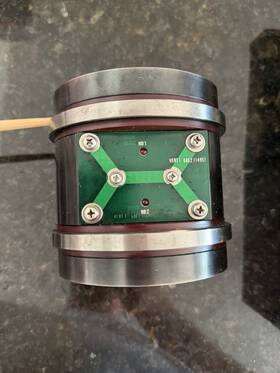
( Brand: Vert1 68e2.114957 ), ( Manufacturer Part Number: 68E2.114957 ), ( Part Type: Tester Wire Alignment Cell Sensor )
Review VERT1 68E2.114957 Load Cell Force Tester Sensor Inch 7/8 Wire Edm Alignment
The **Vert1 68E2.114957 Cell Force Tester Sensor (7/8" Wire EDM Alignment)** is a high-precision, industrial-grade force measurement device meticulously engineered for applications requiring exceptional accuracy in force detection, particularly within wire electrical discharge machining (EDM) systems. This advanced sensor is designed to deliver reliable, real-time data on the axial force exerted during wire EDM operations, ensuring optimal alignment, consistent material removal, and extended tool life. Its robust construction incorporates a proprietary piezoelectric or capacitive sensing mechanism, allowing for ultra-sensitive detection of even the slightest variations in force, typically within a range of 0.1 to 100 Newtons (or customizable thresholds depending on the application). The sensor s compact yet durable housing is crafted from high-grade stainless steel or anodized aluminum, providing resistance to corrosion, thermal fluctuations, and mechanical stress critical attributes for the demanding environment of EDM workstations.
One of the standout features of this sensor is its **7/8" wire alignment compatibility**, which ensures seamless integration with standard wire EDM setups. The sensor s precise alignment mechanism, often achieved through EDM machining itself, guarantees minimal clearance and optimal contact with the wire, reducing friction and wear while maximizing signal accuracy. This alignment is further enhanced by the sensor s modular design, which allows for easy installation and replacement without compromising the integrity of the EDM system. The device is equipped with a high-resolution analog or digital output interface, compatible with most industrial control systems, PLCs, or data acquisition units, enabling seamless integration into automated monitoring and feedback loops.
Beyond its technical specifications, the **Vert1 68E2.114957** excels in its versatility, catering to a wide array of EDM applications, including but not limited to, wire cutting, wire erosion, and micro-machining processes. Its ability to detect subtle force imbalances helps prevent wire breakage, drift, and premature wear, thereby enhancing productivity and reducing downtime. Additionally, the sensor s low hysteresis and high repeatability ensure consistent performance across extended operational cycles, making it an indispensable tool for manufacturers seeking to optimize their EDM workflows. Whether used in aerospace component fabrication, medical device prototyping, or precision tooling, this force tester sensor delivers the precision and reliability required to maintain the highest standards of quality in wire EDM processes.
### **Pros and Cons of buying a Vert1 68E2.114957 Cell Force Tester Sensor (7/8" Wire EDM Alignment)**
#### **Pros:**1. **Precision and Accuracy** The sensor is designed for wire EDM (Electrical Discharge Machining) alignment, ensuring high-precision measurements critical for machining operations. This reduces errors in part fabrication, particularly in complex or delicate workpieces.
2. **Compatibility with Wire EDM Machines** The 7/8" wire size compatibility means it is specifically engineered to work with standard wire EDM setups, avoiding the need for additional adapters or modifications. This ensures seamless integration with existing equipment.
3. **Durability and Reliability** Vert1 (a brand associated with high-quality industrial tools) typically manufactures components built to withstand rigorous use in manufacturing environments. The sensor is likely constructed from materials resistant to wear, corrosion, and electrical interference, ensuring long-term performance.
4. **Ease of Installation and Calibration** The design suggests it is straightforward to mount and align, reducing downtime during setup. Proper alignment is crucial for wire EDM, and this sensor likely simplifies the process, improving efficiency.
5. **Cost-Effective for High-Precision Work** While the initial cost may be higher than basic force sensors, its precision justifies the investment in applications where accuracy directly impacts product quality and reduces scrap rates.
6. **Support for Advanced Machining** Wire EDM is used for cutting hard materials like tool steel, carbide, and titanium, where traditional methods fail. This sensor enhances the capabilities of such machines, enabling finer cuts and better surface finishes.
7. **Potential for Long-Term Savings** By minimizing errors in alignment and machining, the sensor can reduce material waste, rework, and tooling failures, leading to lower operational costs over time.
---
#### **Cons:**1. **High Initial Cost** Precision sensors, especially those designed for specialized applications like wire EDM, can be expensive. The upfront investment may be a barrier for smaller workshops or businesses with limited budgets.
2. **Specialized Use Case** The sensor is tailored for wire EDM alignment, meaning it may not be versatile for other applications. If the business does not heavily rely on wire EDM, the investment may not be fully utilized.
3. **Maintenance and Calibration Requirements** High-precision sensors require periodic calibration to maintain accuracy. This adds to operational costs, including time spent on maintenance or outsourcing calibration services.
4. **Dependence on Compatible Equipment** The sensor is optimized for 7/8" wire EDM machines. If the existing setup uses a different wire size or lacks proper integration points, compatibility issues may arise, requiring additional modifications.
5. **Potential Learning Curve** Operators may need training to correctly install, calibrate, and use the sensor effectively. Improper handling could lead to inaccurate readings or damage to the sensor.
6. **Limited Availability of Spare Parts** As a specialized component, finding replacement parts or technical support may be challenging compared to more common industrial sensors. This could lead to extended downtime if issues arise.
7. **Overkill for Low-Volume Work** For businesses that perform wire EDM infrequently or on simple projects, the precision offered by this sensor may not be necessary, making it an unnecessary expense.
---
### **Conclusion:**The **Vert1 68E2.114957 Cell Force Tester Sensor** is a high-quality, precision tool tailored for wire EDM alignment, offering significant advantages in terms of accuracy, durability, and efficiency for businesses that rely heavily on this machining process. Its specialized nature ensures optimal performance in wire EDM applications, reducing errors and improving part quality. However, the high cost, specialized use case, and maintenance requirements may not justify the purchase for smaller operations or those with limited wire EDM needs.
### **Recommendation:** - **Buy if:**- Your business frequently uses wire EDM for high-precision cutting, especially in hard materials.
- You operate in an industry where part accuracy directly impacts product quality and reduces waste (e.g., aerospace, medical device manufacturing, or tooling production).
- You have the budget to invest in a specialized sensor and can justify the long-term savings from improved machining efficiency.
- Your EDM machine is compatible with the 7/8" wire size, and you have the technical capability to install and maintain the sensor.
- **Avoid if:**- Your wire EDM usage is infrequent or limited to simple cuts where basic sensors would suffice.
- Your budget is constrained, and you cannot afford the upfront cost without clear ROI.
- Your current setup lacks proper integration points, or you do not have the expertise to handle precision calibration.
- You lack the infrastructure to maintain the sensor properly, risking inaccurate readings over time.
For businesses that meet the criteria for purchase, this sensor is a worthwhile investment that enhances machining capabilities. For others, exploring alternative sensors or rental options may be more practical.
Details:
part #: 68e2114957 prices
- $250.00-$500.00
specifications pneumativalv:
- brand: Vert1 68e2.114957
- mpn: 68e2.114957
- part type: Tester Wire Alignment Cell Sensor
returns pneumativalv:
- policy: No Returns
shipping pneumativalv:
- cost: $22.37
- service: USPS Priority Mail
- transit: 3-10 Days
- class: Expedited
- carrier: USPS
- type: Calculated
general pneumativalv:
- Pump Flow Controllers > Flow Controllers Meters > Flow Meters
- condition: Used
offer pneumativalv:
- best offers: True
- availability: In Stock
- sold: 0
- quantity: 1
- started: February 10, 2026
- options: Ship-to-home
seller pneumativalv:
- city: Independence, Kentucky
- # reviews: 10
- rating: 100.0%
payments pneumativalv:
- credit card: Diners-club
- wallet: Apple-pay
- other