GEORG FISCHER 6-2536-P0-RE1 Paddlewheel Flow Sensor 150301027
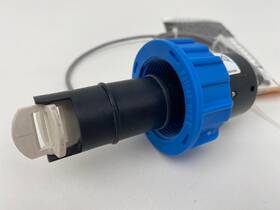
( Brand: Georg Fischer ), ( Manufacturer Part Number: 6-2536-P0-RE1 ), ( Part Type: Flow Sensor )
Review GEORG FISCHER Paddlewheel Flow Sensor
The **Georg Fischer 6-2536-P0-RE1 150301027 Paddlewheel Flow Sensor** is a high-performance, industrial-grade flow measurement device designed for precise and reliable monitoring of liquid flow rates in a wide range of applications. Engineered with robust construction and advanced engineering, this sensor is ideal for use in demanding environments where accuracy, durability, and long-term reliability are critical. The paddlewheel mechanism at its core operates on a simple yet effective principle: as fluid passes through the sensor, the paddlewheel rotates at a speed proportional to the flow rate, allowing for real-time measurement with minimal pressure drop. This design ensures consistent performance across varying flow conditions, making it suitable for applications in water treatment, HVAC systems, chemical processing, and industrial automation.
Constructed from high-quality materials, the **6-2536-P0-RE1** features a durable housing made from corrosion-resistant polymers or stainless steel, depending on the model variant, ensuring resistance to chemical degradation and extended operational lifespan even in harsh environments. The sensor incorporates a sealed, maintenance-free paddlewheel assembly that minimizes wear and tear, reducing the need for frequent calibration or replacement. Its compact and modular design allows for easy integration into existing piping systems, with standard thread connections (such as DN25 or DN40) facilitating straightforward installation. The sensor s output signal, typically a 4-20 mA current loop or pulse output, is compatible with most industrial control systems, PLCs, or data loggers, enabling seamless integration into automated monitoring and process control setups.
One of the standout features of this flow sensor is its wide measurement range, capable of handling flow rates from as low as 0.1 liters per minute to several hundred liters per minute, depending on the specific model configuration. The sensor s linear response ensures high accuracy across its entire operating range, while its low-pressure loss design helps maintain efficient system performance without compromising flow dynamics. Additionally, the **6-2536-P0-RE1** is equipped with temperature compensation mechanisms to account for variations in fluid viscosity and density, further enhancing its reliability in temperature-sensitive applications. Whether used for leak detection, process optimization, or energy management, this paddlewheel flow sensor delivers consistent and dependable performance, making it a trusted choice for industries where precision matters.
### Pros and Cons of buying a Georg Fischer 6-2536-P0-RE1 (150301027) Paddlewheel Flow Sensor
#### **Pros**
1. **High Accuracy and Reliability** The Georg Fischer 6-2536-P0-RE1 is known for its precision in measuring flow rates, making it suitable for applications requiring consistent and dependable performance. Its paddlewheel design ensures reliable detection of fluid flow, even in clean or lightly contaminated liquids.
2. **Durable Construction** Georg Fischer is a reputable manufacturer in the fluid measurement industry, and this sensor is built with materials that resist wear and corrosion, extending its operational lifespan. The robust design helps maintain performance in demanding environments.
3. **Wide Range of Applications** This sensor is versatile and can be used in various industries, including water treatment, HVAC systems, chemical processing, and industrial automation. Its compatibility with different pipe sizes (typically DN15 to DN50, depending on model variations) makes it adaptable to multiple setups.
4. **Easy Installation and Maintenance** The sensor is designed for straightforward installation, often featuring clamp-on or insertion-type mounting options. Maintenance is relatively simple, with replaceable parts available for wear items like the paddlewheel and seals.
5. **Compatibility with Control Systems** The sensor can integrate seamlessly with PLCs, SCADA systems, or other automation platforms, providing real-time flow data for monitoring and control purposes. Its analog or digital output options (e.g., 4-20 mA, pulse, or digital signals) enhance its usability in automated systems.
6. **Low Pressure Drop** Unlike some flow sensors that introduce significant pressure loss, the paddlewheel design minimizes resistance, making it energy-efficient for systems where pressure loss is a concern.
7. **Cost-Effective for Moderate Flow Rates** For applications where the flow rate falls within the sensor s optimal range (typically up to 100 m /h or similar, depending on pipe size), it offers a balanced combination of performance and cost compared to more advanced technologies like ultrasonic or Coriolis meters.
---
#### **Cons**
1. **Limited to Clean or Low-Solid Liquids** Paddlewheel sensors are not suitable for highly viscous, abrasive, or contaminated fluids. Particles or debris can clog or damage the paddlewheel, leading to inaccurate readings or sensor failure. This restricts its use to clean or filtered systems.
2. **Pressure and Temperature Limitations** While the 6-2536-P0-RE1 is designed for moderate conditions, extreme pressure or temperature fluctuations (outside the specified range, e.g., -20 C to 120 C and up to 16 bar) can degrade performance or shorten the sensor s lifespan. Special variants may be required for harsh environments.
3. **Mechanical Wear Over Time** The moving paddlewheel is subject to wear, especially in applications with slight contamination or vibration. This can lead to reduced accuracy or the need for frequent recalibration or part replacement.
4. **Not Ideal for High-Precision or Trace Measurements** For applications requiring extremely low flow rates (e.g., microflow) or high precision (e.g., 0.1% accuracy), more advanced sensors like thermal or ultrasonic meters may be preferable. The 6-2536-P0-RE1 is better suited for moderate to high flow rates with acceptable accuracy ( 1% to 2%).
5. **Calibration Requirements** Like all mechanical flow sensors, it may require periodic calibration to maintain accuracy, especially if used in environments where flow characteristics change over time.
6. **Potential for Signal Noise** In systems with pulsating or turbulent flow, the sensor s output signal may exhibit noise, requiring additional filtering or signal conditioning for reliable data acquisition.
7. **Limited Material Options** While the sensor is typically made of stainless steel or other corrosion-resistant materials, specific applications (e.g., highly corrosive chemicals) may require custom materials or coatings, which could increase costs.
---
### **Conclusion**
The Georg Fischer 6-2536-P0-RE1 paddlewheel flow sensor is a reliable and cost-effective choice for applications requiring moderate to high flow measurement in clean or lightly contaminated liquids. Its durability, ease of installation, and compatibility with automation systems make it a practical option for industries like water treatment, HVAC, and general industrial processes. However, its limitations such as sensitivity to contamination, mechanical wear, and suitability only for moderate flow rates mean it is not ideal for highly abrasive, viscous, or trace-level applications. For such cases, alternative technologies (e.g., ultrasonic, Coriolis, or magnetic flow meters) would be more appropriate.
---
### **Recommendation**
**Buy the Georg Fischer 6-2536-P0-RE1 if:**- You need a dependable, low-cost flow sensor for clean or filtered liquids in moderate to high flow applications (e.g., water distribution, HVAC, or industrial process control).
- Your system operates within the sensor s specified pressure, temperature, and flow rate ranges.
- You can ensure minimal contamination or debris in the fluid to avoid mechanical damage.
- Integration with your existing control or monitoring system is straightforward (e.g., 4-20 mA or digital output compatibility).
**Avoid or consider alternatives if:**- Your fluid contains solids, abrasives, or high levels of contamination.
- You require ultra-high precision, trace-level measurements, or operation in extreme temperatures/pressures.
- The flow rate is consistently very low or highly variable, as the sensor may struggle with accuracy or signal stability.
- You need a non-intrusive or maintenance-free solution (e.g., ultrasonic or magnetic flow meters might be better).
For most standard applications where reliability and cost are prioritized over extreme conditions, the Georg Fischer 6-2536-P0-RE1 is a solid choice. Always verify the sensor s specifications against your exact application requirements before purchasing.
Details:
Processing times may vary, especially during high-demand periods. Location: RC30-2 Manufacturer Specifications. Georg Fischer 6-2536-P0-RE1 / 150301027 Paddlewheel Flow Sensor Gopher Sales A proud subsidiary of Sensor: Brand:: Fischer, model: : 150301027, condition: Used, : : This item is in used condition. HVAC Refrigeration.
Everything included is shown in the photos. It has been removed from functioning equipment.
part #: 62536p0re1 prices
- $410.00-$500.00
specifications pneumativalv:
- brand: Georg Fischer
- mpn: 6-2536-p0-re1
- part type: Flow Sensor
shipping pneumativalv:
- service: USPS Ground Advantage, UPS Ground, USPS Priority Mail Medium Flat Rate Box, UPS Next Day Air
- carrier: USPS, UPS
- type: Calculated
- class: Standard, Expedited, One-day
- cost: $13.35
- transit: 5-11 Days
offer pneumativalv:
- started: May 7, 2026
- sold: 0
- best offers: True
- options: Ship-to-home
- quantity: 1
- availability: In Stock
general pneumativalv:
- condition: Used
- Pump Flow Controllers > Flow Controllers Meters > Flow Sensors
returns pneumativalv:
- method: Money back
- paid by: Buyer
- time: 30 Days
- policy: Returns Accepted
payments pneumativalv:
- other
- credit card: Diners-club
- wallet: Paypal
seller pneumativalv:
- rating: 100.0%
- city: Schenectady, New York
- # reviews: 1696
Georg Fischer 6-2536-P0-RE1 Is Similar To:
- 150104228 Georg Fischer Gf Pvc (34.4% similar) Includes everything you see in pics. These are brand new never installed. If you are interested in just one of them, let me know. Type both socket and threaded end connections included CDC. Electrically actuated...(July 4th, 2017)
- 163567007 Georg Fischer 6 Pvc-c-epdm 7612988637500 (33.6% similar) ...(July 22nd, 2017)
- 198801734 Gf Georg Fischer Signet New George Mini Flow Sensor (51.6% similar) If it is a sealed new in box or packaging item then I will take picture of the package and label but not break seal as decreases value. I will also ship using your ups, or FedEx account if requested. Items will not be shipped until the extra cost is taken care of. This will include the original ...(May 16th, 2018)
- 198822002 3-2000-21 Georg Fischer New (32% similar) New Georg Fischer 21 signet 2000 micro 1/4 in not flow 5-24V-DC sensor D600246 product specifications brand: condition: without factory packaging model: 21 type: shipping weight...(February 24th, 2018)
- 3-2000-11 Georg Fischer New Micro Flow Sensor Npt Gpm (48.3% similar) ...(February 26th, 2018)
- 3-2280 Gf Signet Georg Fischer Processpro Controller Cond Panel Ch Dc (37.9% similar) Looks to be in good condition. In original box. This listing is for a Georg Fischer signet GIF process pro controller condo panel 2 ch dc. Model guaranteed to work...(December 2nd, 2018)
- 3-2536-p0 Georg Fischer Signet Rotor-x (35.6% similar) 1 to 6 ms item as in pictures day warranty...(September 4th, 2017)
- 3-2536-t0 Georg Fischer Paddlewheel Flow Sensor (67.3% similar) 30 lbs shipping DIMENSIONS:6. Georg Fischer t0 paddlewheel flow sensor D637227 brand:Georg condition: used model: shipping...(September 21st, 2018)
- 3-2536p0 Georg Fischer Gf New Signet Paddle Wheel Flow Sensor (62.9% similar) 3 to 20 fats wide turn down ratio: 66:1 installs into pipe sizes: DN15 DN900 36 highly repeatable open-collector output supplied voltage : 5/2 4 CDC 10. Home contact about technology industrial lab test electrical semiconductor new Georg Fischer GIF signet 3-2536P0 rotor-x paddle wheel hi-res flow ...(July 6th, 2018)
- 3-2537-1c-p0 Georg Fischer Signet Paddlewheel Flow Sensor (65% similar) 5 to 8 in operating range. 3 fats allows up to six connections signet 8900 controller low power and high resolution options available with polypropylene S3L 4/2 0 ma outputs test certificate included for -X0, X1INSTALLS into pipe sizes DN15 DN200 8 in. It has the added functionality of various ...(October 3rd, 2018)
- 3-2537-6c-p1 Gf Georg Fischer Signet Type Paddle Wheel Flow Sensor (60.5% similar) 5 to 8 in operating range. Flow:installs into pipe sizes: DN15 to DN2. It has the added functionality of various output options including flow switch, pulse divider, digital S3L or 4 to 20 ma. Installation is simple because the signet 2537 utilizes same fittings as popular 515 and 2536 paddlewheel ...(January 19th, 2019)