FISHER 4160KF Pneumatic Pressure Controller
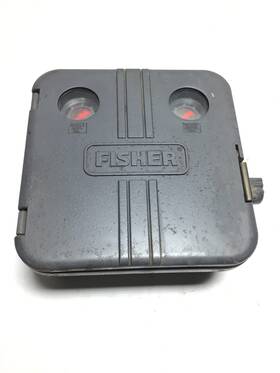
( Brand: Fisher ), ( Manufacturer Part Number: 4160KF ), ( Part Type: Pneumatic Pressure Controller ), ( Unit Type: Unit )
Review FISHER Pneumatic Pressure Controller Input Range To Psig
The **Fisher 4160KF Pneumatic Pressure Controller (Model 2000)** is a high-performance, field-proven instrument designed to deliver precise and reliable pressure regulation in industrial, commercial, and critical process control applications. Part of Fisher s renowned **2000 Series** of pneumatic controllers, this robust unit combines advanced pneumatic technology with a compact, modular design to ensure seamless integration into existing control systems. Engineered for demanding environments, the 4160KF excels in maintaining consistent pressure levels across a wide range of systems, including HVAC, oil and gas, water treatment, and manufacturing processes where stability and accuracy are paramount.
At its core, the 4160KF operates on a **fail-safe pneumatic principle**, utilizing a **direct-acting diaphragm mechanism** to modulate control valves with exceptional responsiveness. Its **proportional control action** allows for smooth, linear adjustments to pressure setpoints, minimizing fluctuations and ensuring optimal system performance. The controller features a **knurled adjustment knob** for precise manual setpoint changes, while its **pneumatic input/output ports** (standard 1/4" NPT) accommodate a variety of signal ranges, including **3-15 psi, 6-30 psi, or 20-100 mbar**, making it versatile for different system requirements. The **KF designation** indicates its compatibility with **Fisher s 2000 Series control valves**, providing seamless pairing for enhanced reliability.
Built to withstand harsh conditions, the 4160KF is constructed from **corrosion-resistant materials**, including **stainless steel and brass components**, ensuring longevity in environments exposed to moisture, chemicals, or temperature variations. Its **IP65-rated enclosure** offers robust protection against dust and water ingress, while the **modular design** allows for easy installation and maintenance without disrupting system operations. The controller s **self-diagnostic features** and **fail-safe fail-open or fail-close configurations** further enhance operational safety, making it an ideal choice for applications where uptime and precision are critical.
Whether deployed in a **large-scale industrial facility, a precision HVAC system, or a critical utility network**, the Fisher 4160KF delivers **unmatched control stability and efficiency**. Its **low power consumption** and **minimal maintenance requirements** contribute to cost-effective operation, while its **backward compatibility** with existing Fisher instrumentation ensures a smooth transition for upgrades. With a reputation for durability and performance, the 4160KF stands as a cornerstone in pneumatic pressure control, offering engineers and operators a dependable solution for maintaining optimal system performance in even the most challenging applications.
### **Fisher 4160KF Pneumatic Pressure Controller (2000 Series) Pros and Cons**
#### **Pros:**1. **High Reliability and Durability** The 4160KF is part of Fisher s well-established 2000 Series, known for robust construction and long-term performance in industrial applications. It is designed to withstand harsh environments, including temperature fluctuations, moisture, and vibration.
2. **Precision Control** Offers accurate pressure regulation with minimal drift, making it suitable for critical processes where consistency is essential (e.g., HVAC, oil & gas, chemical processing). The pneumatic design ensures stable operation without electrical interference.
3. **Wide Range of Applications** Compatible with various media (air, gas, steam) and pressure ranges (up to 2000 psi/138 bar), making it versatile for different industries, including refineries, power plants, and manufacturing facilities.
4. **Modular and Configurable** The 2000 Series supports multiple mounting options (pipe, flange, or panel) and can be integrated with other Fisher instruments (e.g., transmitters, valves) for advanced control systems. Optional accessories like positioners or limit switches enhance functionality.
5. **Low Maintenance Requirements** Designed for minimal upkeep, with sealed internals to reduce wear and corrosion. The pneumatic actuator eliminates the need for frequent electrical component checks.
6. **Field-Proven Technology** Part of a legacy system with decades of operational data, reducing the risk of unproven failures. Many industries still rely on Fisher s 2000 Series for mission-critical applications.
7. **Compatibility with Existing Systems** Works seamlessly with older Fisher controllers and valves, making it a cost-effective upgrade or replacement option for existing installations.
8. **Redundancy and Safety Features** Some models include fail-safe options (e.g., fail-open or fail-close) and can be paired with safety interlocks for critical applications.
---
#### **Cons:**1. **Outdated Technology** While reliable, the 2000 Series is no longer the latest Fisher offering. Newer models (e.g., 4160KF with digital enhancements or the 4160KF with Fieldbus) may provide better diagnostics, integration, and energy efficiency.
2. **Limited Digital Integration** Lacks built-in digital communication (e.g., HART, Profibus, or Foundation Fieldbus) compared to modern controllers. This can complicate integration with smart manufacturing (Industry 4.0) or SCADA systems.
3. **Higher Initial Cost for Advanced Features** While the base unit is cost-effective, adding features like positioners, limit switches, or digital interfaces may increase expenses compared to newer, all-in-one digital controllers.
4. **Training and Support Challenges** Older systems may require specialized technicians for maintenance, calibration, or troubleshooting. Fisher s newer products often come with updated documentation and training programs.
5. **Energy Efficiency Concerns** Pneumatic systems can be less energy-efficient than electric or electronic alternatives, though this is less of an issue in applications where pneumatic power is already standard.
6. **Limited Software Support** Unlike modern digital controllers, the 4160KF does not support advanced software features such as predictive maintenance, remote diagnostics, or cloud connectivity.
7. **Potential Supply Chain Issues** As an older model, parts and replacements may become harder to source over time, depending on the supplier s inventory and Fisher s phase-out plans.
8. **No Built-in Self-Diagnostics** Unlike newer digital controllers, the 4160KF lacks onboard diagnostics to alert operators to potential failures before they occur, increasing the risk of unplanned downtime.
---
### **Conclusion**
The **Fisher 4160KF (2000 Series) pneumatic pressure controller** remains a **reliable, field-tested choice** for industries where legacy systems are already in place or where pneumatic control is non-negotiable. Its strengths lie in **durability, precision, and low maintenance**, making it ideal for applications where uptime and consistency are critical.
However, for **new installations or modernized facilities**, the lack of digital integration, limited advanced features, and potential long-term support challenges may make newer Fisher models (e.g., 4160KF with digital options) or alternative brands (e.g., Emerson s newer digital controllers) more advantageous. If cost, simplicity, and compatibility with existing pneumatic systems are priorities, the 4160KF is a **solid, low-risk choice**. For those seeking **smart control, energy efficiency, or Industry 4.0 readiness**, investing in a more modern controller may be justified.
---
### **Recommendation**
- **Buy the Fisher 4160KF (2000 Series) if:**- You are replacing an existing 2000 Series controller in a system where pneumatic control is standard.
- Your application requires **high reliability in a harsh environment** with minimal maintenance.
- Budget constraints or lack of digital integration needs are not critical.
- You have **in-house expertise** to maintain and calibrate pneumatic systems.
- **Consider an alternative (e.g., newer Fisher model or digital controller) if:**- You are starting a **new project** and want **digital communication, diagnostics, or energy efficiency**.
- Your facility is moving toward **smart manufacturing or remote monitoring**.
- You anticipate **long-term support and parts availability** as a concern.
- Cost savings from a newer, more efficient controller could justify the upgrade.
For most **new builds or digital-first environments**, a more modern controller would likely offer better long-term value. However, for **legacy systems or high-reliability pneumatic applications**, the 4160KF remains a **proven and capable option**. Always verify compatibility with your specific process and consult with a Fisher representative or certified integrator to ensure the best fit for your needs.
Details:
Provides stable and responsive pressure control by comparing process with set point adjusting output accordingly. Us at six one zero-nine two one-eight four. Return Product, designed to operate across a wide temperature range, ensuring consistent performance in various environments.
Cash on Pickup. Handles high-pressure input ranges up to 2000 PSIG, suitable for demanding industrial applications. Buyers pay for return shipping. Shipping: Shipping cost: UPS Calculated.
Output signal range of 3 to 15 PSIG ensures compatibility with standard pneumatic control systems. Field-reversible action allows both direct and reverse control operation depending on application needs. Fisher 4160KF Pneumatic Pressure Controller Input Range to 2000 PSIG: The is engineered for precision and reliability, featuring an input range of PSIG output 3 15. Let us know whats going on, and we ll provide you a return label.
Suitable for use with gases or liquids, including gauge, vacuum, differential pressure inputs. Some exceptions may apply. Durable industrial construction with metal housing and internal components built for long-term reliability.
part #: 4160kf prices
- $399.99-$2037.00
specifications pneumativalv:
- brand: Fisher
- mpn: 4160kf
- part type: Pneumatic Pressure Controller
- unit type: Unit
shipping pneumativalv:
- cost: $22.12
- carrier: UPS, USPS
- transit: 3-8 Days
- type: Calculated
- class: Standard, One-day, Expedited
- service: UPS Ground, UPS Next Day Air, USPS Priority Mail
returns pneumativalv:
- method: Money back
- paid by: Buyer
- time: 14 Days
- policy: Returns Accepted
offer pneumativalv:
- best offers: True
- quantity: 1
- started: April 29, 2026
- availability: In Stock
- options: Ship-to-home
- sold: 0
payments pneumativalv:
- wallet: Google-pay
- credit card: Diners-club
- other
- cash
general pneumativalv:
- condition: Used
- Hydraulics, Pneumatics, Pumps Plumbing > Pump Flow Controllers > Pneumatic Controllers
seller pneumativalv:
- city: Fleetwood, Pennsylvania
- # reviews: 24717
- rating: 99.8%
Fisher 4160KF Is Similar To:
- 10a6132n Fisher Fischer Porter Flowmeter Mod Range Max Pres Temp (34.8% similar) Fischer porter flow meter mod 10A6132N range 0-30MM, max pressure 200 psig, temperature 100 degrees f new other-missing original box...(November 15th, 2018)
- 22b0462x012 Fisher New Multi-trol Pneumatic (30.6% similar) Shipping charges are calculated by zip code and weight. SV-54 D-8 Vince...(January 29th, 2018)
- 2501 Fisher Precision Systems Hi-pressure (33% similar) Mr Fisher was the chief engineer at Westinghouse on flow measurement, and helped develop le flow meter for. This system was used for pressures up to 6500PSI, and tested at Inst. I do not know how much he was trying to sell these for, but it must have been in the 6-7 figures. Bought from the estate ...(December 29th, 2017)
- 32-24-588s Fisher Baumann Pneumatic Valve Actuator Fieldvue Positioner (43.5% similar) provides a high level of service that buyers have come to trust. Actual barman valve may be different than shown. Appear to be in very good condition. Fisher barman 588S pneumatic valve actuator fielder positioned 1. Actual barman valve may be different than shown. Fisher actuator and fielder valve...(March 28th, 2018)
- 32-24588sf Fisher Controls Baumann Pneumatic Actuator Valve Positioner (40.6% similar) This appears to be the case as it looks new. Included: 1 pneumatic actuator brand: Fisher controls barman model 32-24588SFBENCH range: 5-15 psi valve : Fisher model: 36614 to 20 masc filter pressure regulator brand: type 67AF250 max inlet. Excess new, old stock equipment from my largest supplier of ...(September 26th, 2018)
- 3582g 3582g-287-19507 Fisher New Pneumatic Valve Positioner (36.2% similar) If the item is used or new without box open box, then you only will receive what pictured in listing. All products are sold without an existing warranty. Be sure to see our full inventory of rose mount, micro motion, Tokugawa, Allen-Bradley, undress hawser, etc...(October 24th, 2018)
- 3610j Fisher Pneumatic Valve Positioner (41.1% similar) It comes with the original box but entire top has been cut off at topple as visible in pictures. All duties are prepaid by BBQ for USA only 539 with free shipping anywhere in or Canada. The valve is in mint condition. You are buying the best of for a fraction cost. For regions other than USA or ...(June 3rd, 2017)
- Ad1-cda Rosemount Fisher Advanced Input (29.9% similar) This is used and removed from a decommissioned system in building scheduled for demolition. Review the pictures for included elements and condition of item. To make sure you are getting an accurate quote via the shipping calculator, your zip code is default when calculating cost for this item. It is...(June 30th, 2017)
- Av1221010 Bailey Bailey-fisher Potter Co 150psi Valve Pneumatic Positioner Nnb (37% similar) 150PSI valve pneumatic positioned AV1221010 NB ls jch. If needing special shipping services please prior to purchasing buying on the item. The photos that are provided are of the actual item. We estimate shipping costs in order to keep shipping cost as minimal as possible...(September 10th, 2016)
- 32-84 081sa Baumann Fisher Controls New Pneumatic Sanitary Valve 5-15 Psi (36.9% similar) Model 081SA this valve is new and fully guaranteed. New barman Fisher controls 081SA pneumatic sanitary valve 5/1 5 psi you are purchasing a barman Fisher controls pneumatic sanitary valve...(March 18th, 2016)
- 95h-1724-42998 95hp Emerson Fisher New Emerson Fisher Pressure Reducing Regulator 600 Psi 180 F (39.3% similar) New Emerson Fisher pressure reducing regulator 95HP 600 psi 180 type 95HPMAX outlet 600 psi max inlet 600 psi at 180 spring range 80 400FS 95H 1724 42998TAG 230 PVC 1002...(February 10th, 2016)